The day began on a fairly low note. I decided to cancel the exploratory session on Thursday the 19th in Torquay because I felt it was more important to get a feel for the whole Torbay area, and if I want to write a book on it – as I do – then I need to maybe take a longer term view. I am only in that area for four days, so I think I can very well fill my time with sniffing around the place and finding out what goes on. I shall do extensive research on the internet first to make sure that when I speak to people I am well informed.
I will also make a little flyer with the cover of the book I propose to publish, and on the back invite people I meet to contact me for a Zoom call and certainly to make comments and answer questions. Such ideas take the pressure off me because no one is putting pressure on me but myself, so at the age of 81, I think I’m entitled to relax just a little bit, though the idea of doing nothing horrifies me.
This morning I went to Frome for a session with my physiotherapist. He is very well versed in what he does and understands all about body energy, the need for all systems to flow, the need to remove blockages, etc. Mercifully we have things in common in that we both are highly suspicious of the COVID-19 con, as indeed you would be if you saw it to be a con, and we are very much aware of the social pressures put on us to keep us in a continual state of fear. Peter sees the whole body as a flow of energy, and if it is well maintained, then the body will adjust itself as necessary for perfect health. It occurred to me that the human body can either be your prison, or your gateway to freedom.
I left the treatment with a good feeling and went to the Cheese and Grain to have a coffee and a quiche. A fellow approached me and asked me if he could sit at an adjacent seat, and I remarked that the seat had already been reserved for him, and he smiled at the joke. We struck up a conversation, and I discovered that he was a novelist. He referred me to the website of Iain McGilchrist, a man whom I discovered thinks along similar lines to myself. What a find! ChannelMcGilchrist.com is his website.
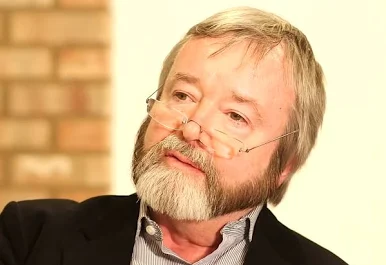
Here is a transcript of Iain talking about the meanings that are required for life and living as opposed to existing. He notes that loneliness is on the increase, according to reports.
Prelude – Purpose, Meaning, and the Limits of Goals
When we talk about purpose and its relationship to meaning, it helps to distinguish between what might be called finite games and infinite games. Finite games have a clear endpoint — you achieve the goal and the game is over. Infinite games, however, derive their value from being played at all. Their meaning is ongoing and cannot be reduced to a final outcome.
Modern life tends to treat everything as a finite game — measurable, goal-driven, and externally defined. But the things that give life meaning don’t fit into that framework. Meaning is not found in ticking off achievements or pursuing purely extrinsic goals. Instead, it comes from openness to deeper “attractive forces” that draw us forward without being fully definable in advance. These forces can be understood through three fundamental relationships, each of which has been weakened in modern civilization.
Part One – Our Relationship with Other People
The first source of meaning is our relationship with one another — being bound together in a genuine sense of community. This is more than simply interacting or networking. It involves sharing life with people who hold similar values, people we trust, confide in, eat with, celebrate with, and build culture alongside. Traditionally this was often held together by shared rituals, beliefs, and a sense of belonging — what older traditions might have called religio, the binding together of lives.
In modern society this cohesion has largely broken down. Technology connects us superficially while often deepening our isolation. Many people live increasingly lonely lives, and studies on loneliness have shown a marked rise in recent years. When asked about their struggles, people frequently name loneliness near the top.
Meaning in our relationship with others cannot be manufactured through a checklist or external goal. It cannot be specified in advance. Like swimming, it must be experienced directly — you cannot learn it from the bank of the river. You have to get into the water of real shared life.
Part Two – Our Relationship with the Natural World
The second source of meaning is our relationship with the natural world in all its beauty and complexity. For most of human history, people lived embedded within nature. Daily life was inseparable from seasons, weather, land, animals, and the rhythms of the earth.
Only in the last century and a half have large numbers of people become detached from this living context. Nature has been reduced to an “environment” — something that surrounds us rather than something we belong to and arise from. This shift represents a profound divorce.
Losing this connection affects our sense of meaning at a deep level. Being in nature reminds us that we are part of something larger, older, and more intricate than ourselves. It provides perspective, humility, and a sense of participation in a living whole rather than confinement within artificial systems.
Part Three – Our Relationship with the Transcendent
The third source of meaning is our relationship with what might be called the transcendent — the spiritual, the sacred, or a reality that lies beyond the purely material. In modern times this dimension is often dismissed as superstition or a relic of less “enlightened” ages.
Yet this dismissal is, in itself, a profound impoverishment. The transcendent is not about primitive explanations of the world, but about our capacity to respond to higher values — truth, beauty, goodness, and the sense that life points beyond mere survival and pleasure. This dimension calls us forward in ways that cannot be reduced to material gain or personal gratification.
A Note on the Hemispheres
These three relationships also connect with how our minds operate. The left hemisphere of the brain is largely concerned with acquisition, control, and measurable outcomes — the mindset of finite games. It seeks pleasure, power, and accumulation.
The right hemisphere, by contrast, is more open to context, relationship, and the sense of the sacred. It is more receptive to the “attractive forces” that give life depth and meaning. If we allow the left hemisphere to dominate entirely, we risk becoming driven by goals that cannot truly satisfy while losing sight of the deeper values that sustain us.
In Summary
Meaning arises not from chasing defined endpoints but from living within three vital relationships:
With other people in genuine community
With the natural world as a living whole
With the transcendent dimension of existence
When these are neglected, life feels empty no matter how many goals we achieve. When they are restored, purpose emerges not as something we manufacture, but as something we respond to.
Without realising it, my new contact this morning helped me to overcome a problem of motivation with the Torquay Project including me going along not knowing anyone really and writing a book from scratch. I realised that if I concentrated on the synchronistic meeting and discovery of interesting people, a method that has worked very well so far, I should start with the focus on the people and let the book mould itself around that rather than focusing on a book in the first case.
I do have the freedom of time, energy, skill set, and desire, so what’s not to like?
0 Comments
Subscribe
Subscribe to my free newsletter and get a weekly summary of my recent diary entries.
 Here is a transcript of Iain talking about the meanings that are required for life and living as opposed to existing. He notes that loneliness is on the increase, according to reports.
0 Comments