An Unexpected Testimony from Sam Jackson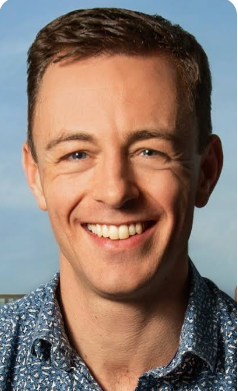
Christians in Media Conference, 9 October 2026
One of the speakers I particularly enjoyed listening to at the Christians in Media conference was Sam Jackson, who has the rather enviable job of overseeing BBC Radio 3, the BBC Proms and the BBC’s classical music strategy. He spoke about faith, creativity, truth and integrity, but what I appreciated was that he did not simply give us a collection of worthy principles. He illustrated them with stories from his own life, some amusing, some surprising and one particularly moving.
Christians speaking with one voice – easier said than done
Sam began by reflecting on the conference theme, One Voice. It sounds straightforward enough, but anyone who has spent time among Christians will know that getting them to agree on everything is about as easy as persuading a roomful of politicians to sing from the same hymn sheet.
He grew up in Surrey, where Christianity was something he encountered mainly through school assemblies, harvest festivals and Christmas celebrations. He became a Christian at eighteen and, rather innocently, had assumed that Christians all believed more or less the same things. It was only afterwards that he discovered the extraordinary variety of denominations, traditions and theological opinions.
I could sympathise with his bewilderment. Here we have a faith supposedly based on unity, yet we sometimes seem remarkably talented at finding things to disagree about.
Sam reminded us that the Apostle Paul had addressed this very issue in his letters to the Colossians and Galatians. The important thing was not that everyone should think alike, but that Christians should recognise their common identity in Christ.
Four musicians and a WhatsApp group
One of the more encouraging stories concerned something that began during the coronavirus pandemic.
In 2020, a friend involved in church leadership in Bristol introduced Sam to a conductor who had recently become a Christian. The conductor had the idea of forming a WhatsApp group for Christians working in classical music.
Sam initially wondered whether this was rather too specialised a venture. Nevertheless, he agreed to give it a go.
The conductor knew a woodwind player in the London Symphony Orchestra, who knew another Christian musician, and before long four people were meeting over Zoom.
There was no grand plan, no constitution, no committee and, mercifully, no elaborate organisational structure. They simply met to encourage one another, pray and share their experiences.
Then something rather wonderful happened. The network began to grow. People discovered that colleagues they had worked alongside for years were also Christians, although neither had previously mentioned it.
By the time of our conference, the original four had become 128 members, including internationally recognised musicians, opera singers, broadcasters, arts executives and orchestral players.
I found this particularly encouraging. It was a reminder that some of the most worthwhile initiatives begin with a simple conversation between a handful of people rather than a heavily funded organisation with an impressive mission statement.
Can music bring us closer to God?
Sam then turned to something close to his heart: the extraordinary power of music.
He recalled hearing Bach’s Mass in B minor at the BBC Proms and being profoundly moved by the experience. Thousands of people were listening together, sharing something that seemed to go beyond the notes being played.
I think most of us have experienced moments like this, whether through classical music, jazz, a choir or even a piece of popular music that unexpectedly touches something deep within us.
Sam made the point that this is not restricted to classical music. Hip-hop, country music, drum and bass and many other musical forms can have a similar effect.
He often meets guests during intervals at the Proms and hears them struggling to describe what they have just experienced. Words such as extraordinary, wonderful and otherworldly frequently come up.
His suggestion was that perhaps we are witnessing something spiritual without necessarily recognising it as such.
I rather liked that thought. We live in a world where everything seems to require a rational explanation, yet music has a remarkable ability to bypass our intellectual defences and reach us directly.
Sam suggested that God is the ultimate creator and artist, and that human creativity reflects something of that divine origin.
He was careful to point out that this does not mean Christians should leap upon every expression of musical appreciation as an opportunity to preach the Gospel. I was relieved to hear that. There are few things more likely to spoil a beautiful moment than someone turning it into an unsolicited sermon.
Rather, he encouraged us to remain sensitive to those occasions when an experience of beauty naturally opens the door to deeper questions.
Music, politicians and common humanity
Another story concerned the Last Night of the Proms.
Sam had attended a reception where government ministers, opposition politicians and representatives of other political parties were gathered together.
Normally, of course, we see these people through the lens of their political differences. They spend much of their professional lives arguing with one another, and the media are only too happy to remind us of their disagreements.
Yet here they were, enjoying the same musical occasion.
Sam found himself reflecting on the fact that, whatever their political opinions, many of these individuals had made considerable personal sacrifices in pursuit of what they believed to be right.
This did not mean that their opinions were equally valid, or that disagreements should simply be swept under the carpet. But for a moment, music had enabled them to recognise something of their common humanity.
I thought this was a valuable observation, particularly at a time when society seems increasingly determined to divide people into opposing camps.
Perhaps we need more occasions where people can meet without immediately being required to declare which side they are on.
Truth, integrity and the BBC
Sam then moved into slightly more challenging territory: the responsibility of broadcasters to pursue truth.
He referred to Psalm 119, particularly the aspiration that one’s actions should consistently reflect God’s principles.
For anyone working in the media, this presents quite a challenge. It is all very well to talk about truth and integrity, but the real test comes when those principles become inconvenient.
Sam referred to the BBC’s commitment to pursuing truth without an agenda. He acknowledged that the Corporation does not always live up to this ideal and that people have widely differing opinions about its performance.
I imagine there were a few raised eyebrows in the audience at this point, given the lively public debate about BBC impartiality.
Nevertheless, his underlying point was sound. Whatever our personal opinions, the pursuit of truth should not be subordinate to our preferences or prejudices.
He also referred to research showing a decline in public trust in news organisations between 2018 and 2026. Although the BBC remained the most trusted news brand in the research he presented, confidence in the industry generally had weakened.
The question, therefore, was how trust could be rebuilt.
Sam’s answer was refreshingly uncomplicated. It begins with individuals behaving honestly, fairly and consistently. We do not need to occupy senior positions to make a difference. The way we conduct ourselves in everyday working relationships can influence the culture around us.
I would add that this applies just as much outside broadcasting as within it. People are remarkably good at detecting the difference between someone who genuinely believes what they are saying and someone who is simply repeating the approved message.
A rather remarkable healing
Sam concluded with a story that was clearly very personal to him.
Some years ago, he injured his hand while playing volleyball. The injury was not particularly serious, but the pain persisted for months and interfered with ordinary activities, including playing the piano.
One Sunday, he attended church with his family, where a visiting minister was speaking about healing.
Sam admitted that he had plenty of unanswered questions about miraculous healing and was naturally sceptical about some of the claims made in this area.
At the end of the service, the minister invited everyone to remain quiet and receptive to prayer.
Someone then suggested that there was a person present suffering from pain in their hand.
Sam was not particularly impressed. After all, there must be quite a few people in any congregation with a painful hand.
Then an elderly woman announced that she believed God wanted her to pray for someone whose hand pain was affecting their ability to play the piano.
That was rather more specific.
Sam came forward, the woman prayed for him, and, according to his account, the pain disappeared immediately and has never returned.
What impressed me was that he did not attempt to turn this into a universal formula for healing. He readily acknowledged the difficult question of why some people appear to receive healing while others do not.
For him, the experience was deeply personal. He felt that God had recognised something important about him: his love of music and the part it played in his life.
Even as he recounted the story, he was visibly moved.
I found this a particularly touching conclusion because it brought us away from the grand institutions of broadcasting and the arts and back to the experience of one individual.
My reflections
What I took away from Sam’s address was that Christianity does not necessarily have to announce itself through overtly religious statements.
It can be expressed through artistic excellence, professional honesty, personal relationships and a willingness to recognise the humanity of people with whom we disagree.
I also liked his example of the four musicians whose informal conversations developed into a network of 128 people. It demonstrated that fellowship need not be complicated and that worthwhile things often develop organically when people are prepared to make contact.
Above all, I was struck by the relationship between creativity and faith. Music has a way of reaching places that arguments and explanations cannot touch. Perhaps that is one reason why it has played such an important part in religious life throughout history.
Sam’s address was a useful reminder that speaking with one voice does not mean speaking in identical voices. Indeed, the richness of the arts depends upon variety, individuality and different forms of expression.
Perhaps the real challenge is not to make everyone sound the same, but to discover the underlying harmony that makes those differences meaningful.
I have retained the main sections so that readers can navigate the article easily, while making the narrative more personal. For your other six speaker reports, I would use a similar approach, giving each its own character rather than forcing them all into an identical format.
