 Christians in Media Conference, Sky Studios, 9 October 2026
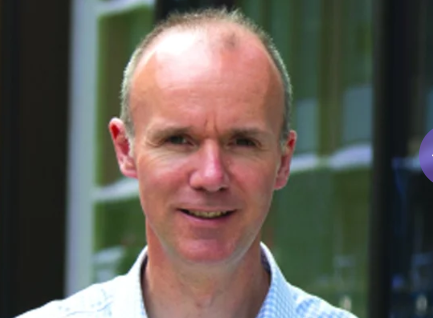
Paul Woolley, Chief Executive of the London Institute for Contemporary Christianity (LICC), gave one of those talks that initially appears to be about one subject but gradually reveals itself to be about something much more fundamental. He began with the extraordinary changes that have taken place in the media over the past twenty years, but his real concern was with our increasingly restless society and its apparent inability to stay with anything for very long.
He invited us to think back to 2006. What were we doing then? What did our lives look like? And, more particularly, what did the media landscape look like?
There were newspapers, magazines, the BBC, ITV, radio and a relatively modest collection of websites. Facebook was still in its infancy, and the idea that practically everyone would soon be carrying a sophisticated broadcasting device in their pocket would have seemed rather extraordinary.
Fast forward twenty years and we have TikTok, Instagram, YouTube, podcasts, newsletters, Substack, WhatsApp and, of course, artificial intelligence. There is an almost unlimited stream of information competing for our attention every waking moment.
Paul pointed out that the relationship between publishers and readers has changed beyond recognition. Twenty years ago, a newspaper published an article and people read it. Today, that same article may pass through Google, social media platforms and AI systems before reaching someone who may have no idea where the information originally came from.
Even the journalist’s job has changed. Someone who was once employed to write stories may now be expected to take photographs, shoot videos, edit recordings, produce podcasts, manage social media and analyse audience statistics, all before lunch. I suspect there were a few knowing smiles in the audience at that observation.
And everyone, it seems, has become a publisher. Once upon a time, reaching millions of people required a printing press, a broadcasting licence and considerable financial resources. Today, all you need is a mobile phone and a reasonable Wi-Fi connection.
More communication, but less trust
One might imagine that this explosion in communication would have produced a better-informed and more trusting society. Unfortunately, the opposite seems to be happening.
Paul quoted research indicating that only 37% of people globally say they generally trust the news. Misinformation has become a major concern, and the sheer volume of competing voices makes it increasingly difficult to distinguish reliable information from speculation, manipulation or outright falsehood.
Here is the paradox: we have never had so many opportunities to communicate, yet we are increasingly uncertain about whom to believe.
He referred to Neil Postman’s famous 1985 observation about society amusing itself to death. The phrase seems remarkably prophetic when applied to today’s world of endless scrolling, notifications and digital distractions.
But Paul wanted to take the argument further. Beneath the technological revolution, he suggested, something more significant has been happening to our culture.
We have become extraordinarily good at starting things and increasingly bad at staying with them.
The culture of the next big thing
This was the part of his address that particularly caught my attention.
Paul described a society in which we constantly move, restructure, rebrand, relaunch, disrupt and optimise. There is always another opportunity around the corner, another platform to join, another initiative to announce and another supposedly revolutionary development demanding our attention.
Of course, change is not necessarily a bad thing. Some organisations desperately need reform. Some leaders have outstayed their welcome, and some established practices deserve to be abandoned.
But what happens when change itself becomes the guiding principle?
Paul illustrated the point by referring to Britain’s remarkable turnover of prime ministers. Since 2016, he observed, we have had seven prime ministers in ten years, compared with five during the preceding thirty-seven years.
His concern was not simply political instability. It was the wider assumption that whatever comes next must somehow be better than what we already have.
We have become preoccupied with the next election, the next financial quarter, the next headline, the next funding round and the next career opportunity.
But who is thinking about the next twenty years? Or the next fifty?
Who is prepared to plant something that they may never live to see fully grown?
I thought this was an excellent question. We live in a culture that celebrates immediate results, yet many of the most worthwhile achievements in life require patience, continuity and a willingness to work without any guarantee of success.
A relationship cannot be hurried into maturity. Trust cannot be manufactured overnight. A community cannot be built through a succession of publicity campaigns.
Some things become valuable precisely because somebody was prepared to stay.
Christianity takes the long view
Paul then turned to the Christian understanding of time, which provides a striking contrast to our present obsession with speed.
The biblical story unfolds over thousands of years, beginning with creation and continuing through Abraham, Israel, the prophets, the life of Jesus, the resurrection and the development of the Church.
It is, as he reminded us, a very long story indeed.
And it is full of people who had to wait.
Abraham waited. Joseph waited. Moses waited. The people of Israel waited. The prophets waited. The disciples waited.
Christians today are still waiting, living between promise and fulfilment.
Paul suggested that some of the most important Christian virtues are patience, perseverance, endurance and faithfulness. These are hardly fashionable qualities. They do not lend themselves particularly well to TikTok videos or motivational slogans promising instant transformation.
Yet they are fundamental to the Christian life.
He referred to the Apostle Paul’s teaching that suffering produces perseverance, perseverance produces character, and character produces hope. Similar themes appear in the letters of James and in Hebrews.
What interested me was his insistence that perseverance should not be confused with passivity.
It does not mean sitting quietly while the world falls apart or accepting circumstances that ought to be changed.
Rather, it means continuing to do something worthwhile when the results are uncertain, remaining faithful when progress is slow and resisting the temptation to abandon a commitment simply because something more exciting has appeared.
Sometimes staying requires considerably more courage than leaving.
A different kind of Christian witness
Paul brought these ideas back to the media industry, where the pressure to be first, loudest and most visible is particularly intense.
He suggested that Christians have an opportunity to offer something different.
Not necessarily another opinion, another campaign or another contribution to the endless stream of online commentary, but a steady and trustworthy presence.
Someone who does not feel obliged to comment on every controversy.
Someone who can resist the pressure to turn every disagreement into a crisis.
Someone who is prepared to say, “I don’t know. Let’s listen, think and consider another point of view.”
In a media environment where outrage often attracts attention, such restraint might appear almost revolutionary.
Paul argued that the central question should not be what will generate the most clicks, make people angry or increase one’s personal profile.
The questions should be: What is true? What is good? What will help people understand the world more clearly?
He gave several examples of what this kind of witness might look like.
It might involve writing a thoughtful article, interviewing someone whose story has been overlooked or asking a question that nobody else has thought to ask.
It might mean remaining in a newsroom for twenty years and gradually becoming the person colleagues turn to for advice because they know that you are fair-minded, thoughtful and dependable.
It might simply involve doing excellent work without expecting applause or recognition.
I found this a refreshing alternative to the idea that making a difference always requires a grand gesture or a spectacular public achievement.
There is something reassuring about the thought that quiet consistency can be just as influential as public prominence.
Building trust one conversation at a time
One of Paul’s strongest arguments was that trust is built through repeated experience.
People gradually come to recognise those who listen carefully, keep their promises, avoid manipulation and do not panic whenever circumstances become difficult.
They begin to think: I know where this person is coming from. I may not agree with everything they say, but I trust their intentions and respect their judgement.
That kind of reputation cannot be created through clever marketing.
It develops over years of ordinary human interaction.
Paul explained that this long-term approach informs the work of LICC and its associated media projects, including the online magazine Seen & Unseen and the Re-Enchanting podcast.
Their purpose is not simply to add more Christian material to an already overcrowded internet. It is to encourage deeper reflection on the world we actually inhabit.
They explore politics, technology, work, culture, beauty, suffering, meaning and hope, bringing Christian perspectives into conversations that might otherwise take place without them.
The emphasis is on sustained engagement rather than occasional campaigns designed to take advantage of whatever happens to be attracting attention.
In other words, it is about being present for the long haul.
What will the world look like in 2046?
Towards the end of his address, Paul invited us to look forward another twenty years.
What will the media landscape look like in 2046?
Will TikTok still exist? Will podcasts still be called podcasts? What will artificial intelligence be capable of doing? Which jobs will have disappeared, and what entirely new occupations might have emerged?
Nobody knows.
Indeed, given the extraordinary changes of the past twenty years, I suspect that most predictions would turn out to be hopelessly inadequate.
But Paul was confident about one thing.
Human beings will still be searching for meaning.
They will still be asking whether there is anything they can trust, whether life has a purpose, what is good, what is true and whether there is reason to hope.
Technology may change almost beyond recognition, but these fundamental human questions are unlikely to disappear.
And there will still be a need for people who are prepared to listen, think, build relationships and remain faithful to something greater than their immediate personal interests.
Paul concluded by suggesting that, in an age of almost infinite content, one of the most radical things Christians can do is not to become louder, but steadier.
Not more reactive, but more deeply rooted.
Not more anxious, but more hopeful.
Not perpetually searching for the next exciting opportunity, but remaining faithful to the work already entrusted to them.
My reflections
I found Paul’s address particularly relevant because it touched upon something that extends far beyond the media.
We seem to be living in an age where novelty is often confused with progress. Newness attracts attention, while continuity is easily dismissed as dull or unambitious.
Yet the things that give life its real substance — friendships, communities, trust, accumulated wisdom and meaningful work — generally develop over time.
I was especially struck by his observation that some things become valuable because somebody stayed. It is a simple statement, but it contains a great deal of wisdom.
There is also a lesson here for anyone involved in writing, broadcasting or communicating ideas. We do not have to compete with every passing fashion or contribute to every controversy. Sometimes our greatest contribution is to remain thoughtful, independent and consistent.
I came away feeling that Paul’s message was both a challenge and an encouragement.
A challenge because it asks us to resist the restless habits of contemporary society, and an encouragement because it suggests that even relatively modest efforts can acquire significance when sustained over time.
We may never know the full effect of our words, our work or our relationships. Indeed, some of the seeds we plant may not bear fruit until long after we have moved on.
But that does not make the planting any less worthwhile.
Perhaps the greatest contribution we can make to an increasingly impatient world is to demonstrate that there are still things worth believing in, working for and remaining faithful to.
In a world obsessed with moving on, perhaps the most radical thing we can do is stay.
This version is ready for your WordPress post. I have kept the section headings for readability, while allowing the personal reflections to emerge naturally rather than turning it into a formal lecture report.
