# Net Zero – Are We Spending Billions to Make a Difference?
I have been reflecting on the extraordinary amount of money being committed to Britain’s Net Zero programme and asking myself a fairly simple question: what measurable difference will all this expenditure make to the planet?
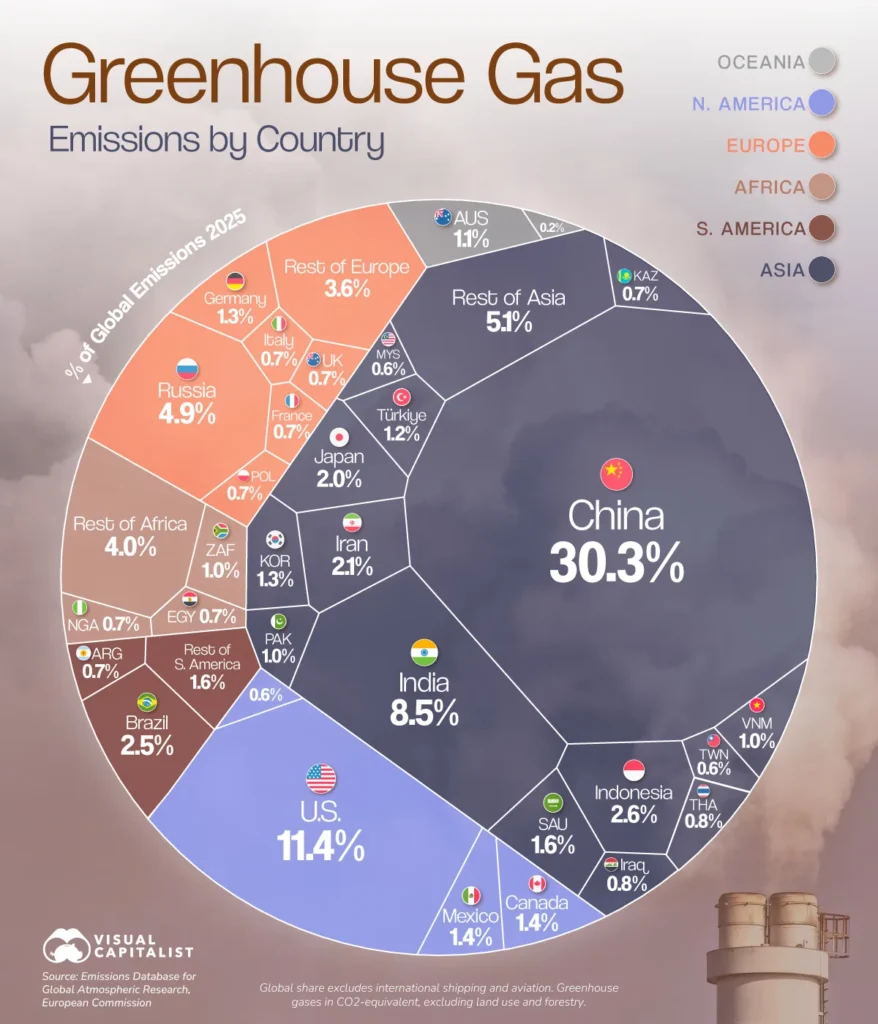
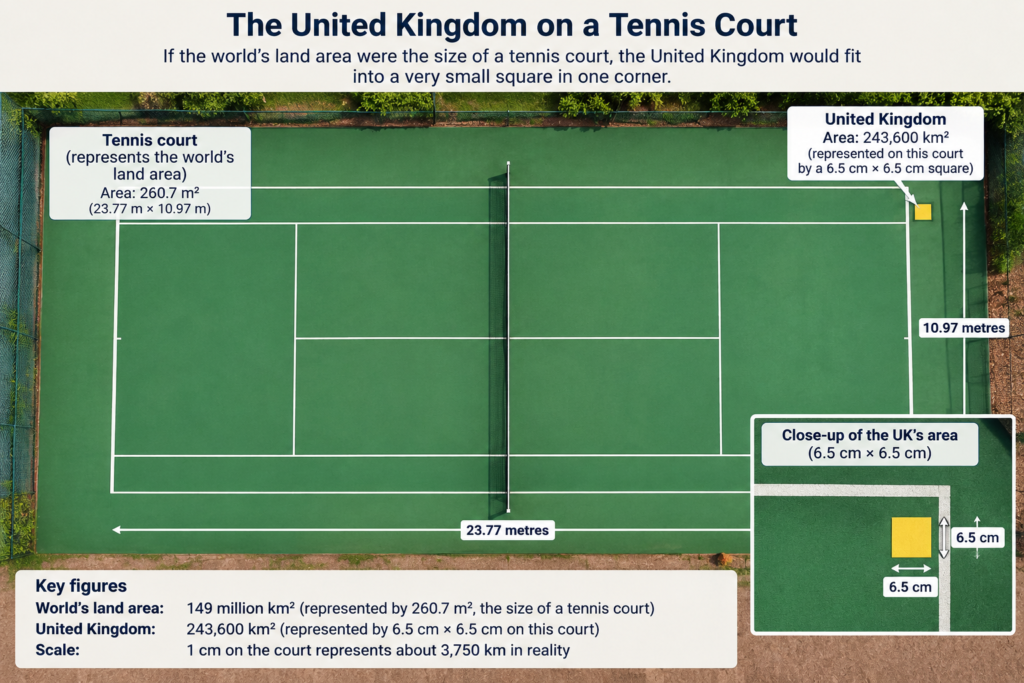
Consider the United Kingdom’s size. We occupy approximately 0.16% of the world’s land area and account for around 0.7% of annual global greenhouse gas emissions. To put our geographical size into perspective, imagine that the entire land area of the Earth were represented by a tennis court. The United Kingdom would occupy a little square of paper measuring just 6.5 cm by 6.5 cm, tucked away in one corner.
Yet this comparatively small country has embarked upon an enormously ambitious programme to reduce its greenhouse gas emissions to Net Zero.
According to figures from the Office for Budget Responsibility and other official sources, the financial commitments are considerable. Net Zero-related departmental spending is expected to average approximately £12 billion annually between 2025 and 2030. Environmental levies associated with energy and related policies amount to around £14 billion in 2025–26, although not all of these are exclusively attributable to Net Zero. Looking further ahead, the OBR has projected an average annual fiscal cost of approximately £30 billion over the coming decades, including lost taxation as petrol and diesel vehicles are progressively replaced.
These are different categories of expenditure and cannot simply be added together. Nevertheless, they illustrate the scale of the financial commitment being made in the name of climate policy.
And who ultimately pays? The taxpayer, the household energy consumer, businesses and, indirectly, almost everyone who purchases goods and services.
I am not suggesting that environmental protection is unimportant. Quite the opposite. But surely the public is entitled to ask what measurable benefits are being achieved and whether the expenditure represents value for money.
## Carbon dioxide – enemy or essential ingredient of life?
One aspect of the debate that has always interested me is the portrayal of carbon dioxide as something inherently undesirable.
Without carbon dioxide in the atmosphere, photosynthesis as we know it would be impossible. Plants absorb CO₂ and, using energy from sunlight, convert it into the substances they need to grow. In the process, they release oxygen. Without this remarkable natural mechanism, life on Earth would be profoundly different, and much of it could not exist.
Commercial greenhouse growers sometimes deliberately increase atmospheric CO₂ concentrations to encourage plant growth, often to around 800–1,200 parts per million, compared with the current outdoor concentration of approximately 426 ppm.
Clearly, carbon dioxide is not simply a poison. It is an essential component of the natural world.
Of course, that does not mean that increasing its concentration indefinitely would be harmless. A substance can be essential to life and still have undesirable effects when its concentration changes. The scientific argument about CO₂ and climate concerns its ability to absorb infrared radiation and influence the Earth’s energy balance, rather than whether plants need it.
## What does history tell us?
Atmospheric carbon dioxide concentrations have changed considerably over the past two centuries.
Around 1800, the concentration was approximately 280 ppm. By 1900 it had risen to about 296 ppm, and by 2000 to around 370 ppm. In 2026, global measurements are approximately 426 ppm.
There is no doubt that concentrations have increased.
But it is also worth remembering that climate has never been entirely static. During the Medieval Warm Period, approximately AD 950–1250, parts of Europe and the North Atlantic experienced relatively warm conditions, despite atmospheric CO₂ concentrations remaining close to 280 ppm.
This reminds us that climate is influenced by several interacting factors, including solar variations, volcanic activity and ocean circulation. It does not disprove the warming influence of carbon dioxide, but it demonstrates that climate cannot be understood through one variable alone.
## There is also something called wind
Here is another consideration that rarely seems to receive sufficient attention in public discussion.
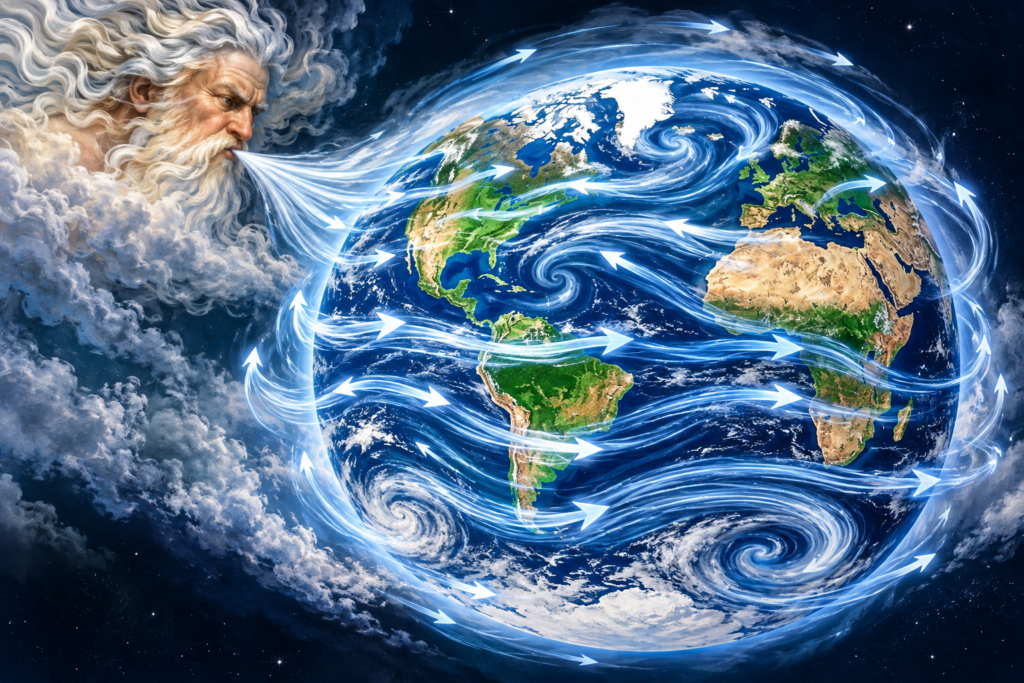
The atmosphere does not recognise national boundaries.
Carbon dioxide is a long-lived gas that becomes relatively well mixed throughout the atmosphere. Winds and atmospheric circulation continually transport gases across countries and continents. Consequently, the concentration measured in Britain is broadly similar to that measured elsewhere in the world.
If Britain reduces its emissions, the benefit is therefore global rather than confined to our own territory.
This brings me back to the question that prompted these reflections. Given that Britain contributes less than 1% of annual global greenhouse gas emissions, what difference can our national programme realistically make?
There is a legitimate scientific answer: every reduction in cumulative emissions makes some contribution, and the combined actions of many countries can produce a substantial effect. Supporters of Net Zero also argue that technological innovation, reduced dependence on imported fossil fuels and international cooperation provide benefits beyond Britain’s direct contribution to atmospheric CO₂.
Nevertheless, the scale of those benefits should be quantified and compared with the financial costs, rather than simply assumed.
## Where is the evidence of value for money?
What I would particularly like to see is a clear, accessible account showing what Britain’s Net Zero expenditure is expected to achieve.
How many tonnes of greenhouse gas emissions will be avoided? What proportion of the global total does that represent? What reduction in future warming is attributable to Britain’s efforts, both independently and through international cooperation? And what are the consequences for household bills, taxation, employment and industrial competitiveness?
Equally, we should ask what benefits may arise from cleaner technologies, reduced fossil-fuel imports, improved air quality and the development of new industries.
These are questions that deserve careful examination rather than political slogans from either side.
I return to my imaginary tennis court, pictured above, with a tiny square of paper representing the United Kingdom. We are a small part of the Earth’s land area, operating within one shared atmosphere.
**My question remains: how do we establish that the billions being spent are producing benefits proportionate to their cost?**
Surely that is not an unreasonable question for a taxpayer to ask.
